Everything You Need to Know About the Process, Materials, Design Considerations, and Manufacturing in Vietnam

What Is Aluminum Die Casting?
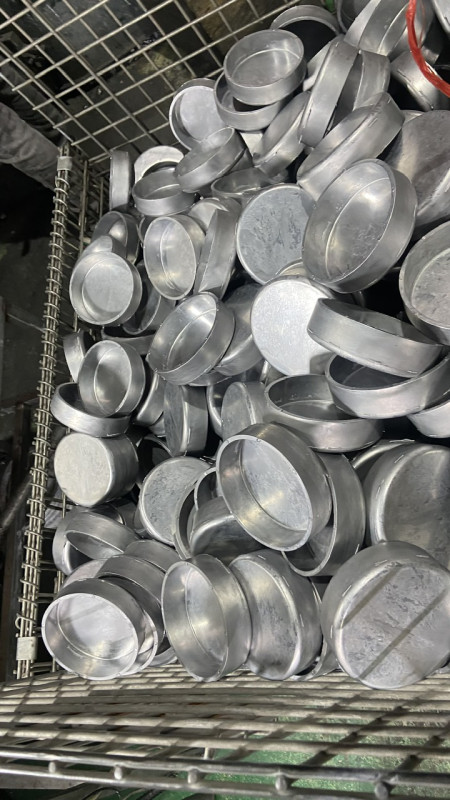
Aluminum die casting is a high-pressure manufacturing process in which molten aluminum alloy is injected into a hardened steel mold at high speed and pressure. Once the metal solidifies, the casting is ejected, trimmed, inspected, and prepared for secondary operations such as machining or surface finishing.
Compared with traditional casting methods, aluminum die casting offers exceptional dimensional accuracy, repeatability, and production efficiency. These advantages make it one of the most widely used manufacturing processes for automotive, electrical, industrial, and consumer products.
Today, millions of aluminum die cast components are produced every day around the world, ranging from small electronic housings to complex structural parts for electric vehicles.
How Aluminum Die Casting Works
Although every project has unique requirements, the manufacturing process generally follows these steps:
- Aluminum alloy is melted in a furnace.
- Molten metal is transferred into the die casting machine.
- The alloy is injected into the steel mold under high pressure.
- The casting solidifies within seconds.
- The mold opens and ejector pins remove the part.
- Excess material such as runners and flash is trimmed.
- Secondary operations including CNC machining or drilling are performed if required.
- Surface finishing and final inspection complete the process.
Because the mold is made from hardened tool steel, the same tool can produce thousands—or even hundreds of thousands—of identical parts with excellent consistency.

Why Aluminum Is the Preferred Material
Among all die casting metals, aluminum has become the industry’s preferred choice for many engineering applications.
Its key advantages include:
- Excellent strength-to-weight ratio
- High corrosion resistance
- Good thermal conductivity
- Excellent electrical conductivity
- Easy machining after casting
- Fully recyclable material
- Lower transportation cost because of reduced weight
For industries that demand lightweight yet durable products, aluminum provides an ideal balance between mechanical performance and manufacturing cost.

Common Aluminum Die Casting Alloys
Different alloys are selected according to strength, corrosion resistance, machinability, and casting performance.
| Alloy | Main Characteristics | Typical Applications |
|---|---|---|
| ADC12 | Excellent castability and fluidity | Industrial parts, housings |
| A380 | High strength and dimensional stability | Automotive components |
| A360 | Better corrosion resistance | Electrical and outdoor products |
| AlSi10Mg | Higher mechanical properties | Specialized engineering parts |
ADC12 remains one of the most popular alloys in Asia because it combines good casting performance with competitive material cost.
Advantages of Aluminum Die Casting
Excellent Dimensional Accuracy
High-pressure die casting can achieve tight dimensional tolerances, reducing or even eliminating secondary machining for many features.
High Production Efficiency
Cycle times are often measured in seconds rather than minutes, making die casting ideal for medium and high-volume production.
Complex Geometries
Internal ribs, bosses, thin walls, and complex shapes can often be produced in one casting.
Excellent Surface Finish
Compared with sand casting, die cast parts have smoother surfaces that are suitable for painting, powder coating, or additional machining.
Lower Cost at Higher Volumes
Although tooling investment is relatively high, the cost per part decreases significantly as production volume increases.

Limitations of Aluminum Die Casting
Like every manufacturing process, die casting also has limitations.
- Initial tooling investment can be significant.
- It is generally not economical for very small production quantities.
- Very large components may exceed machine capacity.
- Internal porosity may affect pressure-tight applications if the process is not properly controlled.
- Design modifications after tooling production can be expensive.
Selecting the correct manufacturing process should always consider production quantity, geometry, functional requirements, and overall project cost.
Design Considerations
Good product design has a major impact on manufacturing efficiency and tooling life.
When designing a die cast component, engineers should consider:
- Uniform wall thickness whenever possible.
- Appropriate draft angles to facilitate part ejection.
- Generous fillet radii to reduce stress concentration.
- Proper rib design instead of excessively thick walls.
- Machining allowance only where necessary.
- Suitable locations for ejector pins and gates.
Design for Manufacturability (DFM) reviews before tooling production can significantly reduce manufacturing costs and improve product quality.
Common Surface Finishing Options
Aluminum die cast parts can receive various surface treatments depending on functional and aesthetic requirements.
Typical finishing options include:
- Powder coating
- Wet painting
- Shot blasting
- Sand blasting
- Chromate conversion coating
- Electrophoretic coating (E-coating)
- CNC finishing for precision surfaces
Because ADC12 contains a relatively high silicon content, conventional decorative anodizing usually produces inconsistent appearance. For applications requiring anodized finishes, wrought aluminum alloys such as 6061 are often more suitable.

Typical Applications
Aluminum die casting is widely used across multiple industries.
Examples include:
- Electrical enclosures
- LED lighting housings
- Automotive brackets
- Pump bodies
- Gearbox housings
- Furniture hardware
- Power tool components
- Telecommunications equipment
- Industrial machinery parts
Its combination of lightweight construction and mechanical strength makes aluminum suitable for products where both durability and weight reduction are important.

Quality Control Throughout Production
Reliable manufacturers implement quality control at every production stage.
A typical quality control process includes:
- Incoming material inspection
- Chemical composition verification
- First Article Inspection (FAI)
- In-process dimensional inspection
- Coordinate Measuring Machine (CMM) verification
- Surface appearance inspection
- Functional testing where required
- Final inspection before shipment
For critical projects, additional inspections such as X-ray testing, leak testing, or PPAP documentation may also be required.

Why Manufacture Aluminum Die Cast Parts in Vietnam?
Vietnam has become an increasingly attractive manufacturing destination due to its combination of competitive production costs, skilled engineering talent, and expanding export capabilities.
Compared with many traditional manufacturing locations, Vietnam offers:
- Competitive labor costs
- Growing supply chain for casting and machining
- Modern manufacturing equipment
- Strong export infrastructure
- Experience serving customers in North America, Europe, and Australia
For companies seeking reliable OEM manufacturing, Vietnam provides an effective balance between quality, cost, and responsiveness.
Why Choose ASIA Mechanical?
ASIA Mechanical provides comprehensive OEM manufacturing solutions for customers worldwide.
Our capabilities include:
- Aluminum die casting
- Precision CNC machining
- Sheet metal fabrication
- Welding and assembly
- Product finishing
- Quality inspection
- Export packaging
From prototype development to mass production, our engineering team works closely with customers to optimize product design, reduce manufacturing cost, and ensure consistent quality throughout every production stage.
Conclusion
Aluminum die casting remains one of the most efficient manufacturing processes for producing lightweight, durable, and dimensionally accurate metal components.
Selecting the right alloy, optimizing product design, and working with an experienced manufacturing partner are key factors in achieving long-term project success.
Whether you are developing a new product or transferring production to Vietnam, early collaboration with your manufacturing partner can help reduce tooling risks, improve manufacturability, and shorten time to market.
